 Look around and you will see a lot of day to day objects. You recognize them almost instantaneously and involuntarily. You don’t have to wait for a few minutes after looking at a table to understand that it is in fact a table. Machines, on the other hand, find it very difficult to do this task. People have been working for decades to find a solution to this problem, but they have only been able to achieve an accuracy of around 65%. Why is it so hard for machines to recognize and categorize objects like humans? What’s so difficult here? We do it everyday and we get it right almost every single time. What’s the missing link? This is actually the holy grail of computer vision! Continue reading “How Do We Recognize Objects?”
Tag: Images
Peeking Into The Third Dimension With 3D Glasses
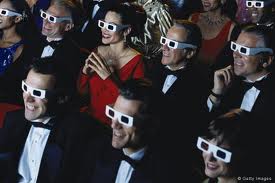 Instead of directly explaining it, I will take a different route this time. Let’s take a look at this conversation between Walter and Michael. In case you are not familiar with them, Walter is a mathematician and Michael is his friend who refuses to acknowledge that humans need complex mathematical models. This attitude of Michael doesn’t sit well with Walter and hence they are constantly at loggerheads over this issue. They were once walking along and they came across a multiplex. Continue reading “Peeking Into The Third Dimension With 3D Glasses”
Good Things Come In Small Packages
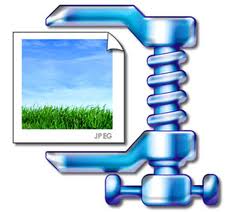 We encounter digital images everyday. We see a lot of JPEG files on our computers, cameras, phones and tablets. The actual images are huge and it should actually take up a lot of space to fit in all that data. But somehow our machines are able to compress all those images and store everything compactly. Ever wondered how it’s possible to fit so many images in such small space? How can the JPEG algorithm achieve so much reduction in size without visibly losing the image quality? Continue reading “Good Things Come In Small Packages”
The Magic Of Reverse Image Search

Are you familiar with the images shown above? What if you want to find out what these images contain? For those of you who are not familiar with Google reverse image search, do the following: Go to Google Images and click on the camera icon towards the right end of the search bar. Continue reading “The Magic Of Reverse Image Search”
 Perpetual Enigma