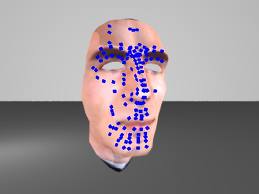
 Ever wondered if you can build a working face detector quickly? If you are in computer vision, you would have built a face detector one time or the other. If not, then you will be able to build one by the end of this post. This blog post is not about the concept or the algorithm behind real time face detection. We will only deal with building one. If you are not willing to get your hands dirty, then this post wouldn’t be very useful to you. Continue reading “How To Build A Face Detector?”
Year: 2013
The Genesis Of Genetic Algorithms
 Let’s say you have a function and you want to optimize it. In real life, this function can take many forms like choosing the right set of features for your car while keep the price low, picking the best possible apartment considering all the different factors like location, rent, closeness to stores etc, making a business plan, and many other things. In fact, we continuously use optimization in our everyday life without even realizing it. The interesting thing to note is that we don’t get the most optimal answer every time. We just look around for a while and stop when we get a good enough answer. More often than not, these answers are sub-optimal, mostly depending on the initial point we chose. So how do we get to the best answer? There might be billions of options, do we need check all of them to get to this global optimum? Continue reading “The Genesis Of Genetic Algorithms”
Can Machines Be Truly Independent?
 In my previous blog post, we discussed about how we can measure a computer’s intelligence. When we talk about machine intelligence, what exactly are we talking about? Are we just talking about machines mimicking the human ways and mannerisms in the best possible way? No matter what the machines do, they are still following a predefined sequence of steps or an algorithm that dictates the sequence of steps. The field of artificial intelligence has been trying for a long time to put actual intelligence into a machine, but we are still far from it. The question then would be, can machines be truly independent? Continue reading “Can Machines Be Truly Independent?”
Can We Measure A Computer’s Intelligence?
 People talk about artificial intelligence all the time. Artificial intelligence is the branch of study which deals with putting intelligence into the machines so that they can do things by themselves. But how do we know if they are getting intelligent? For us humans, we have designed various kinds of IQ tests to measure our intelligence. Is there anything for machines as well? I am not talking about the robustness of an algorithm or the accuracy with which a computer can finish a certain task, I am talking about the actual intelligence. Is it possible to measure it? Continue reading “Can We Measure A Computer’s Intelligence?”
Curvelet Analysis
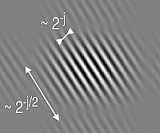 This blog post is a continuation of my previous post on ridgelet analysis. Motivated by the problem of finding efficient representation of objects, people introduced yet another representation system called the curvelet transform. This is very efficient in representing objects that have discontinuities along curves, and compressing image data as well. Curvelets are a non-adaptive technique for multi-scale object representation. Why do we need this? Are they more efficient that ridgelets? Continue reading “Curvelet Analysis”
Ridgelet Analysis
 The pioneering work of researchers on signal processing paved the way to the powerful concept of multiresolution analysis. This is perhaps best known under the generic name of wavelets. Signals occur in the form of images, voice, radar, sonar, infrared etc. Different techniques have been developed over the years to understand these signals. Multiresolution provides us with tools to analyze these signals at different level of resolutions. It’s like looking at the same thing using a microscope with different magnifying powers. The formulation of multiresolution analysis moved the signal processing field away from classical Fourier analysis. But are wavelets equally efficient for all the shapes? Can we somehow take advantage of the shape of the object? Continue reading “Ridgelet Analysis”
 Perpetual Enigma