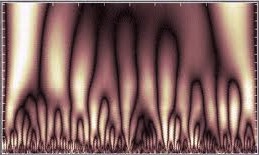
 Wavelets are actually a topic of pure mathematics. But over the last couple of decades, they have shown great promise and are now being adapted for a vast number of applications. They are used in image compression, molecular dynamics, seismology, physics, DNA analysis etc. One of the main advantages of wavelet analysis is the amount of information we can extract from a signal. Wavelet transforms are extensively used to analyze many different kinds of signals. So what exactly are these wavelets? Why is this method of analysis so powerful? Continue reading “Wavelet Analysis”
Category: Mathematics
Interpretation of Gaussian Distribution
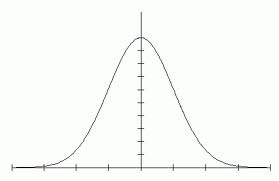 When we deal with large amount of data, we can’t have specific rules for each and every instance. We have to come up with a model which defines the whole data. This model can then be used to analyze unknown inputs. More often than not, the data has some underlying pattern. When we think of a model, we extract specific characteristics from the data and come up with a formulation which best explains the behavior of the data. One of the most frequently occurring pattern is the Gaussian Distribution. It is used almost everywhere in science and technology. But what is it exactly? Why do we need it? Continue reading “Interpretation of Gaussian Distribution”
Fourier Analysis
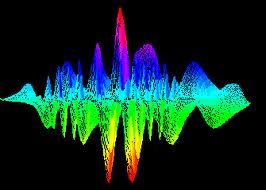 Most of the people in the tech field have already heard about Fourier analysis by now. Some of them love it, some of them hate it and the remaining few are just not sure what it is! Fourier analysis is one of the most fundamental tools in the field of engineering and technology. In fact, it is as fundamental as addition or multiplication. It is heavily used in signal processing, physics, speech analysis, image processing, cryptography and many more fields. Whenever people try to read and understand it, they are always hindered by all the mathematical equations. The actual explanation is drowned somewhere. Let’s see if we can fix that here. Continue reading “Fourier Analysis”
Optimal Solution Concept
 Do you remember Adam Smith? He is considered the father of modern economics. His theories were used for more than 150 years by governments, industries, banks etc. One of his famous laws states that people act in their own self-interest. He postulated that in a free market, you will have to compete to survive. He explained how rational self-interest and competition can lead to economic prosperity. Is this always true? Can you think of a case where this theory might not lead us to the most optimal solution? This is not a philosophical discussion, so I actually want you take a minute and think. If people are competing against each other, then what strategy would lead to the most optimal overall result. Continue reading “Optimal Solution Concept”
Probabilistic Randomness Of Stochasticity
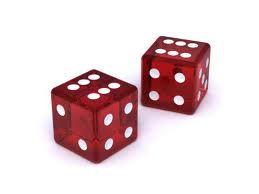 Do you see what I did with the title there? Anyway, you must have heard the term ‘probability’ being used around you. People use it in different contexts and in different forms – “What is the probability that Spain will win the next world cup?” or “I will probably finish reading the book by midnight” or “It’s quite probable that she won’t return until tomorrow”. When people talk about probability as a mathematical concept, all they think of is the percentage chance of something happening. But is that all there is to it? If that is the case, then why did they have to dedicate an entire branch of study to this? Probability theory is much more than just calculating the likeliness of something happening. It’s used almost everywhere, by almost everyone, for almost everything. Surprised? Well let’s find out then. Continue reading “Probabilistic Randomness Of Stochasticity”
 Perpetual Enigma