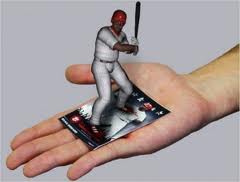
 Augmented Reality (AR) has been one of the most exciting fields to have come into prominence in the last few years. Back when people starting working aggressively on computer graphics, great innovations took place. Today, we have 3D movies with high end computer graphics, but it is still on the screen inside our machines. People then started to think how to pull the graphics out of the screen and integrate them into real world. The result of this effort was augmented reality. It tries to blur the line between what’s real and what’s virtual. It enhances our perception of reality. You can take a look at this video to see what I’m talking about. How does this technology work? How does it track the marker? Continue reading “Augmented Reality”
Rooting Your Phone
 A lot of Android devices are being activated everyday. We hear the term ‘rooting’ floating around all the time. Most of the people don’t bother to tinker with their phones. They just want to enjoy their device as it is. Some people think that rooting their phone will break the software or damage their phone in some way, and so they don’t want to mess around. What exactly is rooting? Do we even need to root our phones? If so, why exactly do we need to root our phones? Continue reading “Rooting Your Phone”
Probabilistic Randomness Of Stochasticity
 Do you see what I did with the title there? Anyway, you must have heard the term ‘probability’ being used around you. People use it in different contexts and in different forms – “What is the probability that Spain will win the next world cup?” or “I will probably finish reading the book by midnight” or “It’s quite probable that she won’t return until tomorrow”. When people talk about probability as a mathematical concept, all they think of is the percentage chance of something happening. But is that all there is to it? If that is the case, then why did they have to dedicate an entire branch of study to this? Probability theory is much more than just calculating the likeliness of something happening. It’s used almost everywhere, by almost everyone, for almost everything. Surprised? Well let’s find out then. Continue reading “Probabilistic Randomness Of Stochasticity”
Fingerprint Recognition
 Fingerprint recognition was one of the first forms of biometric authentication techniques developed. Biometric authentication refers to the process of identifying humans by their natural traits. This can include fingerprints, face, voice, iris etc. When you want machines to authenticate a particular person, you choose a feature of that person which he cannot control. Fingerprints are still widely used in criminal investigations and in certain other domains where security is required. Have you ever wondered if fingerprints are distinct enough to be used to identify a person? How do they match fingerprints? Continue reading “Fingerprint Recognition”
How Do We Recognize Objects?
 Look around and you will see a lot of day to day objects. You recognize them almost instantaneously and involuntarily. You don’t have to wait for a few minutes after looking at a table to understand that it is in fact a table. Machines, on the other hand, find it very difficult to do this task. People have been working for decades to find a solution to this problem, but they have only been able to achieve an accuracy of around 65%. Why is it so hard for machines to recognize and categorize objects like humans? What’s so difficult here? We do it everyday and we get it right almost every single time. What’s the missing link? This is actually the holy grail of computer vision! Continue reading “How Do We Recognize Objects?”
Decrypting Cryptography
 What’s the first thing that came to your mind when you read the title? How do you perceive the term ‘cryptography’? It has something to do with secrecy and hiding right! Anyway, cryptography is the art of protecting information by transforming it into an unreadable format. Only the people who have the secret key can decode this message. The process of transforming the information into something unreadable is called Encryption and the reverse process is called Decryption. Let’s say you have a message you want to send to your friend. The message to be encoded is called plaintext and the encrypted message is called ciphertext. The goal here is to find the most secure way of transforming the plaintext into ciphertext. How do we encrypt it? How do we make sure it remains safe even if someone happens to see it? Continue reading “Decrypting Cryptography”
Connecting With Kinect
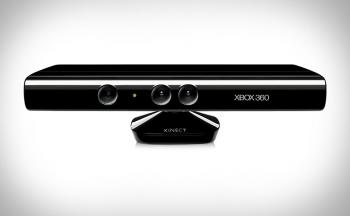 If you haven’t experienced Kinect yet, do yourself a favor and just go do it! For people who have just landed on earth, Kinect is a motion sensing device for Microsoft XBox 360 video game console. You can check out the video here. Instead of using buttons or controllers to play video games, this device enables you to use your body. Your movements will be captured and the video game character will move accordingly. When Kinect first came out in 2009, it took the world by storm! How is it possible to capture our body movements so accurately without using any wires? How does it recognize our gestures? Continue reading “Connecting With Kinect”
Peeking Into The Third Dimension With 3D Glasses
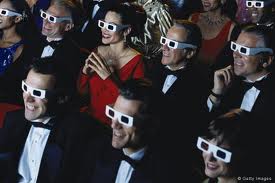 Instead of directly explaining it, I will take a different route this time. Let’s take a look at this conversation between Walter and Michael. In case you are not familiar with them, Walter is a mathematician and Michael is his friend who refuses to acknowledge that humans need complex mathematical models. This attitude of Michael doesn’t sit well with Walter and hence they are constantly at loggerheads over this issue. They were once walking along and they came across a multiplex. Continue reading “Peeking Into The Third Dimension With 3D Glasses”
Uncovering The Hidden Treasure
 Before we start, I want to clarify that this post is not about treasure hunting! As you read along, the title will start making sense. In one of my previous blog posts, I have discussed speech recognition and a few ways to model the problem. I have also talked about how we can use machine learning to solve various real life problems. A lot of times, we need to model temporal events. Temporal events are things that happen over a period of time. Sometimes we know everything about a system, and so we just predict what’s going to happen next. What if we don’t know everything about a system? What if we can just see the effects of that system? Can we learn about a system even though we cannot directly observe what’s happening inside? Continue reading “Uncovering The Hidden Treasure”
Touch Me Not
 We are increasingly moving towards touchscreen technology. Every new mobile gadget that’s coming to the market has a touchscreen. Most of us interact with touchscreen technology on a daily basis. I’m sure you would have gotten curious some time or the other to know how it actually works. What happens when you touch the screen? How does it know where you touched the screen? All of us deserve to know how it works, especially when we use it so often. Continue reading “Touch Me Not”
 Perpetual Enigma