 In machine learning, we use a lot of supervised learning models to analyze data and recognize patterns. If we consider the basic problem of binary classification, a machine learning algorithm takes a set of input data and predicts which of two possible classes a particular input belongs to. Kernel-classifiers comprise a powerful class of non-linear decision functions for binary classification. These classifiers are very useful when you cannot draw a straight line to separate two classes. The support vector machine (SVM) is a good example of a learning algorithm for kernel classifiers. It looks at all the boundaries and picks the one with the largest margin. It is widely used in many different fields and it has a very strong mathematical foundation. Now it is being claimed that Bayes Point Machine (BPM) is an improvement over SVM. Pretty bold claim! So what exactly is a BPM? How is it better than SVM? Continue reading “Bayes Point Machines”
Category: Machine Learning
What Are Conditional Random Fields?
 This is a continuation of my previous blog post. In that post, we discussed about why we need conditional random fields in the first place. We have graphical models in machine learning that are widely used to solve many different problems. But Conditional Random Fields (CRFs) address a critical problem faced by these graphical models. A popular example for graphical models is Hidden Markov Models (HMMs). HMMs have gained a lot of popularity in recent years due to their robustness and accuracy. They are used in computer vision, speech recognition and other time-series related data analysis. CRFs outperform HMMs in many different tasks. How is that? What are these CRFs and how are they formulated? Continue reading “What Are Conditional Random Fields?”
Why Do We Need Conditional Random Fields?
 This is a two-part discussion. In this blog post, we will discuss the need for conditional random fields. In the next one, we will discuss what exactly they are and how do we use them. The task of assigning labels to a set of observation sequences arises in many fields, including computer vision, bioinformatics, computational linguistics and speech recognition. For example, consider the natural language processing task of labeling the words in a sentence with their corresponding part-of-speech tags. In this task, each word is labeled with a tag indicating its appropriate part of speech, resulting in annotated text. To give another example, consider the task of labeling a video with the mental state of a person based on the observed behavior. You have to analyze the facial expressions of the user and determine if the user is happy, angry, sad etc. We often wish to predict a large number of variables that depend on each other as well as on other observed variables. How to achieve these tasks? What model should we use? Continue reading “Why Do We Need Conditional Random Fields?”
Derandomization Of RANSAC
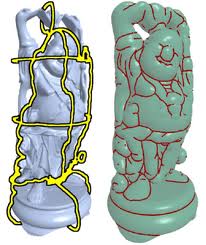 Let’s say you are a clothes designer and you want to design a pair of jeans. Since you are new to all this, you go out and collect a bunch of measurements from people to see how to design your jeans as far as sizing is concerned. One aspect of this project would be to see how the height of a person relates to the size of the jeans you are designing. From the measurements you took from those people, you notice a certain pattern that relates height of a person to the overall size of the jeans. Now you generalize this pattern and say that for a given height, a particular size is recommended. To deduce the pattern, you just took a bunch of points and drew a line through them so that it is close to all those points. Pretty simple right! What if there are a few points that are way off from all the other points? Would you consider them while deducing your pattern? You will probably discard them because they are outliers. This was a small sample set, so you could notice these outliers manually. What if there were a million points? Continue reading “Derandomization Of RANSAC”
Expectation Maximization
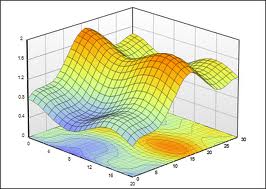 Probabilistic models are commonly used to model various forms of data, including physical, biological, seismic, etc. Much of their popularity can be attributed to the existence of efficient and robust procedures for learning parameters from observations. Often, however, the only data available for training a probabilistic model are incomplete. Missing values can occur which will not be sufficient to get the model. For example, in medical diagnosis, patient histories generally include results from a limited battery of tests. In gene expression clustering, incomplete data arise from the intentional omission of gene-to-cluster assignments in the probabilistic model. If we use regular techniques to estimate the underlying model, then we will get a wrong estimate. What do we do in these situations? Continue reading “Expectation Maximization”
Robot Vs Turing
 In one of my previous blog posts, we discussed about measuring computer’s intelligence and how we can use the Turing test for it. After Turing proposed that test, a lot of people realized its importance and started working on it. People really wanted to believe that machines are indeed capable of thinking. We need a way to determine if a computer is thinking on its own. The biggest obstacle here is that this is a very subjective topic. Given the knowledge that something is indeed a machine, how do we ascertain that the machine is capable of thinking? Continue reading “Robot Vs Turing”
The Genesis Of Genetic Algorithms
 Let’s say you have a function and you want to optimize it. In real life, this function can take many forms like choosing the right set of features for your car while keep the price low, picking the best possible apartment considering all the different factors like location, rent, closeness to stores etc, making a business plan, and many other things. In fact, we continuously use optimization in our everyday life without even realizing it. The interesting thing to note is that we don’t get the most optimal answer every time. We just look around for a while and stop when we get a good enough answer. More often than not, these answers are sub-optimal, mostly depending on the initial point we chose. So how do we get to the best answer? There might be billions of options, do we need check all of them to get to this global optimum? Continue reading “The Genesis Of Genetic Algorithms”
Can Machines Be Truly Independent?
 In my previous blog post, we discussed about how we can measure a computer’s intelligence. When we talk about machine intelligence, what exactly are we talking about? Are we just talking about machines mimicking the human ways and mannerisms in the best possible way? No matter what the machines do, they are still following a predefined sequence of steps or an algorithm that dictates the sequence of steps. The field of artificial intelligence has been trying for a long time to put actual intelligence into a machine, but we are still far from it. The question then would be, can machines be truly independent? Continue reading “Can Machines Be Truly Independent?”
Can We Measure A Computer’s Intelligence?
 People talk about artificial intelligence all the time. Artificial intelligence is the branch of study which deals with putting intelligence into the machines so that they can do things by themselves. But how do we know if they are getting intelligent? For us humans, we have designed various kinds of IQ tests to measure our intelligence. Is there anything for machines as well? I am not talking about the robustness of an algorithm or the accuracy with which a computer can finish a certain task, I am talking about the actual intelligence. Is it possible to measure it? Continue reading “Can We Measure A Computer’s Intelligence?”
Bayesian Classifier
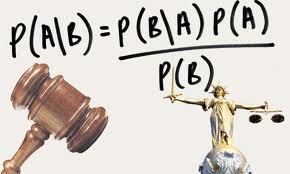 In machine learning, classification is the process of identifying the category of an unknown input based on the set of categories we already have. A classifier, as the name suggests, classifies things into multiple categories. It is used in various real life situations like face detection, image search, fingerprint recognition, etc. Some of the tasks are really simple and a machine can identify the class with absolute certainty. A common example would be to determine if a given number is even or odd. Pretty simple right! But most of the real life problems are not this simple and there is absolutely no way a machine can identify it with absolute certainty. For example, object recognition, weather prediction, handwriting analysis etc. So how do machines deal with these problems? What approach can be used here? Continue reading “Bayesian Classifier”
 Perpetual Enigma